Showing posts with label Buyers. Show all posts

Wednesday, March 16, 2022

Is this the year to buy a home?

Are You Wondering if This Is the Year To Buy a Home?

Are You Wondering if This Is the Year To Buy a Home? | MyKCM

Every year, many renters ask themselves the same question: Should I continue renting, or is it time to buy a home? If you’re a renter, chances are you’ve asked yourself that question at least once, and it’s likely because you’ve faced an increase in your monthly housing costs over time. After all, according to Census data, rents have risen consistently for decades.

To make an informed and powerful decision, the first step is understanding what’s happening in today’s housing market so you can determine which option is the better long-term financial decision for you.

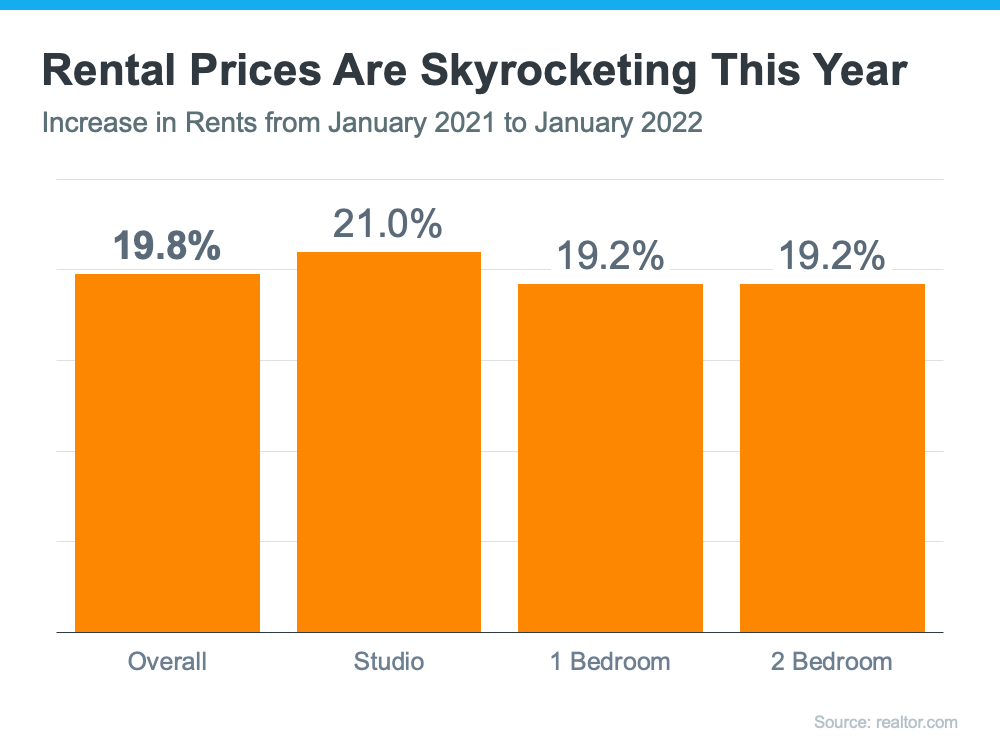
Rents Are Going Up Again This Year

Rents are skyrocketing right now. Data from realtor.com shows just how much rental prices are surging throughout the country. The graph below highlights rental unit price increases over the past year:
Are You Wondering if This Is the Year To Buy a Home? | MyKCM

If you’re a renter and plan on signing a new lease, your monthly costs are likely to go up when you do. Those rising costs can have a big impact on your financial goals, including any plans you’re making to save for a home purchase.

Homeownership Offers Stable Monthly Costs

Of course, one of the key benefits of owning your home is that you’re able to lock in and stabilize your payments for the duration of your loan. That’s not the case when you rent.

While rents are already on the rise, there’s a good chance many people will see their rental costs increase even more this year. As Danielle Hale, Chief Economist at realtor.comsays:

With rents already at a high and expected to keep going up, rental affordability will increasingly challenge many Americans in 2022. For those thinking about making the transition from renting to buying their first home, rising rents will remain a motivating factor. . . .”

So, if you're ready to become a homeowner, waiting any longer may not make financial sense. Instead, escape the cycle of rising rents and enjoy the many benefits that come with homeownership today.

Bottom Line

Starting your journey towards homeownership can pay off significantly this year. If you’re financially ready today, let’s connect so we can discuss your options.

Wednesday, April 8, 2015

Survey Finds Younger Buyers Taking Over

Survey Finds Younger Buyers Taking Over

This was the second consecutive year that NAR’s study found that the largest group of recent buyers came from those who were 34 and younger, comprising 32 percent of all buyers in 2014 and 31 percent in 2013. Buyers aged 35 to 49, often considered part of Generation X, followed closely behind with a 27 percent share of 2014 sales. Millennial buyers represented more than double the amount of Baby Boomer buyers.
“Over 80 percent of Millennial and Gen X buyers consider their home purchase a good financial investment, and the desire to own a home of their own was the top reason given by Millennials for their purchase,” says Lawrence Yun, NAR chief economist. “Fixed monthly payments and the long-term financial stability homeownership can provide are attractive to young adults despite them witnessing the housing downturn and subsequent slow recovery in the early years of their adulthood.” 
The survey also found that fears over younger consumers using the Internet to bypass real estate professionals aren't necessarily credible either. While an overwhelming majority of all buyers (88 percent) search for homes online, most then purchase their home through a real estate agent, with Millennials using agents the most, at 90 percent.
“Nothing can replace the real insights and guidance REALTORS® deliver to help consumers navigate the complex buying and selling process,” says NAR President Chris Polychron, executive broker with 1st Choice Realty in Hot Springs, Ark.
Methodology: NAR mailed a 127-question survey in July 2014 using a random sample weighted to be representative of sales on a geographic basis. A total of 6,572 responses were received from primary residence buyers. After accounting for undeliverable questionnaires, the survey had an adjusted response rate of 9.4 percent. The recent homebuyers had to have purchased a home between July of 2013 and June of 2014. 
Still, challenges remain for these younger buyers. Yun says their share of purchases would be higher if not for the numerous obstacles they face: “Many Millennials have endured underemployment and subpar wage growth, and rising rents and repaying student debt have made it very difficult to save for a downpayment. For some, even forming households of their own has been a challenge.” 
The survey also found these common characteristics of younger buyers in 2014:
  • The median age of Millennial homebuyers was 29, their median income was $76,900 (up from $73,600 in 2013) and they typically bought a 1,720-square foot home costing $189,900 ($180,000 a year ago).
  • The typical Gen X buyer was 41 years old, had a median income of $104,600 (up from $98,200 a year ago) and purchased a 1,890-square foot home costing $250,000 (same as last year).
  • Generation X buyers were the most likely to be married (68 percent), and Millennial buyers were more likely (compared to other generations) to be part of an unmarried couple (14 percent).
  • On their primary reason for purchasing a home, a desire to own a home of their own was highest among Millennials at 39 percent. A change in a family situation – likely the birth of a child – was the highest (13 percent) among Gen X buyers. 
  • The share of Millennials buying in an urban or central city area increased to 21 percent in the past year (19 percent a year ago), compared with only 12 percent of older boomers.
  • In terms of neighborhood choice, Millennials were most influenced by the quality of the neighborhood (75 percent) and convenience to jobs (74 percent). Convenience to schools was most desired by Gen X buyers.
Looking to buy or sell?  Let me know how I can help.
 
Contact your local RE/MAX  Realty Center Agent Stacey Guzanick 262.490.3696, Guzanick@gmail.com,  if you have questions about buying a house or selling one. I can  guide you  toward your next home.
See you at the closing!

Wednesday, March 25, 2015

Making an Offer

Making an offer

Making an offer.. 

You are all excited, you found the perfect house and then.... comes the offer.  A written proposal, designed to cover all aspects of the purchase agreement.  Once accepted, it becomes a binding contract.  The offer details the property's address, sales price and closing date. It must include provisions for any required and requested inspections and clearly state all financial obligations regarding mortgage, deposits and taxes.  

Call me, my job is to know the changing laws and requirements.


Looking to buy or sell?  Let me know how I can help.
 
Contact your local RE/MAX  Realty Center Agent Stacey Guzanick 262.490.3696, Guzanick@gmail.com,  if you have questions about buying a house or selling one. I can  guide you  toward your next home.
See you at the closing!


Monday, March 9, 2015

A Note of Caution About HOAs

A Note of Caution About HOAs

Most horror stories about homeowners associations are rooted in the owners’ misunderstanding of what they are buying into.
The number of Americans living in common-interest communities — those governed by either a homeowners association, condo board, or cooperative — has grown from 1 percent in 1970 to 24 percent in 2013, according to the Foundation for Community Association Research. Now comprising 20 percent of the national housing stock, community associations are a growing share of the residential real estate market, but many home owners have little understanding of the rights and responsibilities they are buying into when they purchase in these communities. This leads them down the road of dissatisfaction and disillusionment with the HOA concept in general.
Many owners do not recognize that the benefits of shared ownership involve relinquishing some of the independence of sole ownership. That’s the root of so many of the HOA horror stories we’ve all heard, as owners normally do not realize that their submission to the will of their new community is accomplished by the automatic application of covenants running with the residence.
HOA living is not suited for those unwilling to cooperate with the community. The most caustic critics of HOAs in general are actually opposed to the concept of joint ownership. This is a completely unrealistic position, particularly as society continues to urbanize and affordable land is increasingly scarce. Truly, persons who want a home that is their castle and theirs alone should not live in HOAs.
HOAs operate under governing documents such as recorded covenants, bylaws, and operating rules. Although they can greatly affect one’s experience with their property, many owners in HOA communities consider the documents unimportant, treating them as if they were an appliance owner’s manual — to review only after buying and beginning to use the product. Governing documents may limit leasing, pets, parking, type of flooring, garage usage, or a myriad of other aspects of the residence.
Oftentimes, HOA home buyers don’t know exactly what they are acquiring. Most assume attached housing are condominiums and detached are planned development lots, but these generalizations are not always accurate. Although the answer is easily found in either the subdivision map or the covenants, homes can be bought or sold for years without the owners ever learning what type of housing they are living in. Years ago, an HOA more than 20 years old at the time was sued by two home owners who claimed the association converted their attached “townhouse” homes from condominiums to planned development lots, despite the fact that the original covenants clearly identified the HOA as a planned development. (Yes, the case was quickly thrown out by the judge).
Another point of confusion arises from the failure of owners to comprehend the concept of exclusive-use common areas. Balconies, patios, and porches are frequently believed to be areas where the HOA has no authority to govern its use. But in condominiums, these areas usually are exclusive-usecommon areas: That is, they are controlled by the HOA but used by the individual owner.
The financial health of an HOA community also impacts owners. To keep monthly assessments low, some HOA boards will not accumulate sufficient funds in a reserve account to offset ongoing deterioration of common elements in the property, such as roofs, paint, and paving. Poorly funded HOAs will need major special assessments or bank loans when big building components need replacement. Competent appraisals may not reveal the true value of the HOA property because appraisers are not required to examine the HOA reserve fund. Logic dictates that residences in a poorly funded HOA will be worth less than the well-funded association across the street, but normal market valuations will not reflect that important economic reality.
None of this is to say that buying in an HOA community is a bad deal. Some home owners will enjoy having a body that instills harmony in a neighborhood by regulating its appearance and use for everyone’s comfort. But in order to ensure that every owner gets the most out of their HOA, they must be educated about them. That, of course, starts with a knowledgeable real estate professional.

Looking to buy or sell?  Let me know how I can help.
 
Contact your local RE/MAX  Realty Center Agent Stacey Guzanick 262.490.3696, Guzanick@gmail.com,  if you have questions about buying a house or selling one. I can  guide you  toward your next home.
See you at the closing!

Saturday, February 28, 2015

Anatomy of a Home Purchase


  • For most people, finding the right home begins with a house-hunting strategy combining personal preferences, guidance from others (including an agent) and a mix of neighborhood exploring and online search.
    For some, the search takes a while; others find what they want right away. In either case, your real estate agent can be a huge resource of insight and guidance, working through issues or complications that arise along the way.
    Here’s a general outline of what to expect during a home purchase, from the buyer's perspective.
    Buyers make a purchase offer.
    This is it! You've found the home of your dreams, looked over disclosure documents, reviewed comparable sales data, talked it over with your agent and submitted an offer. The sellers may accept your first offer, but more often will return a counteroffer. In fact, additional negotiations are common, and your agent will help you through this generally stressful stage.
     
    Check out our interactive HUD-1 and GFE (Good Faith Estimate) documents so you'll know what to expect when these appear lap during the transaction.
     
    The sellers accept.
    Once everyone is happy with the terms, the parties have reached what is known as mutual acceptance and enter into a purchase and sale agreement.
    Buyers put up earnest money.
    To solidify your intent to buy, you'll place a deposit, or earnest money, on the property. The amount varies, but is generally at least 1 percent of the purchase price. You'll write the check to the escrow company, not the seller. Note: This money counts toward your down payment later.
    Escrow opens.
    The earnest money deposit goes into an escrow account, where all funds will be held until closing, when they are then distributed to the right people (lender, mortgage broker, title insurer, real estate agents, etc.).
    Buyers apply for a mortgage.
    This step is streamlined if you've already been preapproved for a loan (which is a smart thing to do). If not, you'll begin the loan application process now.
    The lender inspects title history and orders a property appraisal.
    The lender needs key information about the property before granting a loan. This is when potential problems can come to light. For example, the appraisal could show a lower value than the purchase price, or the lender could have trouble finding comparable homes. Also, the title search could turn up liens or other problems.
    A home inspection takes place.
    You'll hire an inspector – generally, your agent will suggest one, or provide several options – to check the home and point out minor and major problems that should be fixed before closing. At this point, you still have the option of backing out of the deal. Through your agent, you'll submit a list of requested work, and the sellers have the option to complete the tasks, do some of them but not others, or reject the request. The sides will negotiate until reaching an agreement.
    Removing contingencies.
    If the house passes inspection, appraisal and title search, and everything is good to go, then all contingencies can be removed, paving the way to a closing.
    Closing time arrives.
    Once contingencies are removed and financing is set, all parties sign a seemingly endless stack of documents, and the transaction closes.
    Packing begins!
    When the final signatures are in place, it’s time to put down the pens, shake hands, exchange smiles and start packing for the move!
    Looking to buy or sell?  Let me know how I can help.
     
    Contact your local RE/MAX  Realty Center Agent Stacey Guzanick 262.490.3696, Guzanick@gmail.com,  if you have questions about buying a house or selling one. I can  guide you  toward your next home.

    See you at the closing!

Friday, February 27, 2015

Choosing and Working with The Right Realtor When Purchasing your Home


Upon beginning your search, you’ll find that many agents specialize in areas beyond general residential properties. You’ll find specialists in luxury homes, distressed properties, international transactions and more. Before you dive in, it’s important to determine whether you're dealing with a specific property type and/or a certain market segment – high-end homes, retirement communities, etc. This will help you from the start.
It’s equally important to find an agent who can get the job done. Although your uncle's friend may dabble in real estate, ask yourself if he's really the person most qualified to help you buy or sell your home. Personal referrals are great, but only if they're based on relevant criteria.
Abilities matter. And production matters. You want someone with experience, education and a proven track record of successful closings. On all counts, RE/MAX is a solid place to start your search. Nobody in the world sells more real estate than RE/MAX, and RE/MAX agents collectively hold more professional designations than agents at any other national real estate brand.
You can search for a RE/MAX agent in your area – drilling down into aspects such as years of experience, production level, specialization, education and more – through the Find an Agent tool here on remax.com.

Looking to buy or sell?  Let me know how I can help.
 
Contact your local RE/MAX  Realty Center Agent Stacey Guzanick 262.490.3696, Guzanick@gmail.com,  if you have questions about buying a house or selling one. I can  guide you  toward your next home.
See you at the closing!

Sunday, February 22, 2015

5 Things to Think About When Buying Your First Place

5 Things to Think About When Buying Your First Place
As a renter, you have the luxury of choosing a place that meets your needs at the moment.​ Buying a home is a much bigger commitment, both in terms of finances and the length of time you’ll likely live there. When seeking out your first place – whether a house or condominium or anything in between – it’s important to do your homework.
Here are 5 things to consider as you begin the process of purchasing your first place.
1. The growth possibilities. Shop for a place that meets your current spaces needs, but also consider one that can adjust to a changing household. A five-year plan may not pan out as you expect, so think about possible life changes that could impact your need for bedrooms, bathrooms and square footage.
2. What's under the hood. Your first place may not come with many frills or luxury features – but all the basics should be in good condition. Thoroughly inspect prospective properties. And before any purchase is made, hiring a professional inspector is a must. Your real estate agent can guide you through this key step.
3. Know that no home will be perfect. Your first home may likely not be the perfect place. But make it the right one. Finding the right home is often a matter of prioritizing. Make a list of “must haves,” along with “nice to haves” and “not necessary to haves.” A three-car garage is nice, but would you rather have a larger kitchen or live in a good neighborhood? Only you can measure the importance of the amenities you are looking for.
4. Consider ALL the costs of ownership. When you buy a home​, you take on recurring costs you don’t have to worry about as a renter. Look for a home that meets your budget in terms of full living costs – mortgage, utilities, trash pick-up, sewage fees, homeowner's association dues and other fees. Your lender doesn't take into account these costs when approving your home loan. A good real estate agent can help you calculate estimated monthly costs to determine the most appropriate price range for you.
5. The lifespan of things. In addition to identifying cosmetic and structural flaws before you buy, know what to expect from the home's components. How long until you need to replace the roof, appliances, furnace or carpet? Everything may be in working order now, but all homes need these types of repairs at some point. Researching the expected remaining life on large-ticket items can help you plan for the future.

Looking to buy or sell?  Let me know how I can help.
 
Contact your local RE/MAX  Realty Center Agent Stacey Guzanick 262.490.3696, Guzanick@gmail.com,  if you have questions about buying a house or selling one. I can  guide you  toward your next home.
See you at the closing!