Showing posts with label Stacey Guzanick. Show all posts

Monday, January 11, 2016

Yes ~ you Stage the Bathroom


By Melissa Dittmann Tracey, REALTOR® Magazine
Since 2000, the standard home for-sale was about 1,800 square feet – which mostly stayed steady for several years. But lately, the standard new home has swelled to 2,200 square feet, according to the National Association of Home Builders. Where is all of that extra space going? Bathrooms.
Builders are adding more bathrooms to homes, reports CNNMoney.
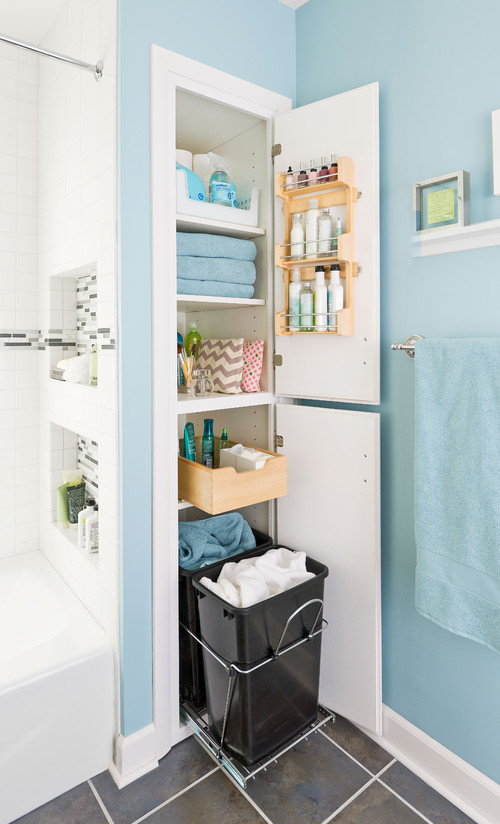
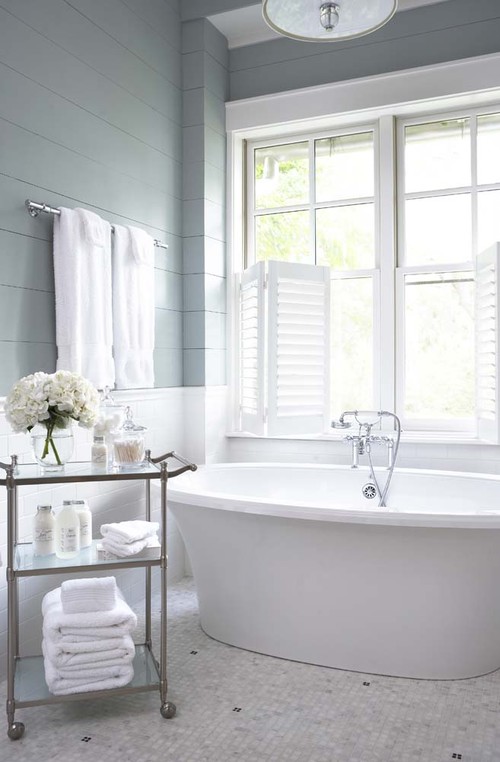
If buyers are putting so much more emphasis on bathrooms, you’d be wise to focus more on it in your staging too. Take a look at some of these photos below from Houzz to get inspiration for some simple, affordable ideas to stage bathrooms.
1. Try a luxurious, fluffy bath rug.

2. Add some fresh flowers, like a vase of hydrangeas, for some added color pop.

3. Show off some smart organization. You know, buyers will be peeking in the closets. 

4. Set up like a spa: Fluffy folded towels with lotions on a cart.

5. Swap out for a framed mirror.

6. Try a slightly bolder shower curtain and tie it back to add more drama.

7. Bring in some bling: Silver accessories can add some shine, as long as your home owner is committed to keeping them sparkling.

Contact Stacey Guzanick 262.490.3696,   RE/MAX Realty Center  Guzanick@gmail.com,  if you have questions about buying a house or selling one.

I can  guide you  toward your next home.

www.HomesWithStacey.com

See you at the closing!

Monday, November 9, 2015

Why Buyers Need to Buy That New Home Now

Why Buyers Need to Buy That New Home Now


Your client has decided on new-home construction, but they're dragging their feet. Need to give them extra motivation to get that contract signed this fall or winter?
“Fall and winter are a great time to start working with a builder and do much of the upfront planning and legwork that goes into a new-construction home,” says Brian Brunhofer, president of Meritus Homes. “Plus, there are some definite advantages to beginning that process before the end of the year that buyers might not be aware of.”
1. Low interest rates: The 30-year fixed-rate mortgage is still under a 4 percent average, according to Freddie Mac. But most economists are predicting that interest rates will soon be on the rise, and when rates do rise that will deflate buyers’ purchasing power.BUILDER online recently highlighted some of those advantages, including:
2. Buffering in more time: Many buyers fail to take into account the length of the permitting and approval process, which has to take place before the actual construction. “The reality is that after a buyer signs a contract with us, it takes anywhere from 60 to 90 days to get architectural plans submitted and permits approved before we actually start construction,” Brunhofer says. “Buyers who begin that process in the fall or winter can relax knowing they have plenty of time to get all those details taken care of and be 100 percent ready to roll when the early spring construction season starts. And if we have a mild enough winter, we might be able to get a jump on construction for them even earlier in the year.”
3. Taking advantage of the financial benefits: Before the end of the calendar year, builders will have secured their 2016 contract prices for labor and building materials. As such, they’ll adjust their home prices to reflect any increased costs. Buyers who decide to sign a contract with a builder this fall rather than waiting until next spring may see some cost savings by taking advantage of 2015 pricing. 
4. Timing the market right: Many families prefer to be able to move into their new-home prior to the beginning of a school year. Buyers who work with builders in the fall and winter will likely be ready to move into their new home by next summer. “Buyers should expect anywhere from five to six months of actual construction time,” Brunhofer says. “That means if we get all the upfront approvals and permitting taken care of during the fall and early winter, we’ll start work the minute the ground thaws and we’ll be wrapped up in time for a summer move-in date.” Also, for buyers with an existing home to sell, they will be able to sell their current home then during the spring time, which is traditionally a busier housing market.

Contact Stacey Guzanick 262.490.3696,   RE/MAX Realty Center  Guzanick@gmail.com,  if you have questions about buying a house or selling one.

I can  guide you  toward your next home.

www.HomesWithStacey.com

See you at the closing!

Friday, October 9, 2015

Bad Winter Coming? 10 Ways to Get Ready

Bad Winter Coming? 10 Ways to Get Ready

With a particularly strong El Niño cycle brewing in the Pacific Ocean this year — it may develop into the worst on record, scientists say — this winter could pack a wallop of weather disturbances on par with recent years.
There are 10 common winter problems you can help your clients avert, and now is the perfect time to start planting the bug in their ears. Find out what causes these issues and what the solutions are in our article, "Help Clients Prepare for Weather Challenges."
."Those living in colder climates are wise to prepare, whether they're sellers needing to clear walkways and maintain a furnace in good condition or buyers eager to know that their future home will be well-insulated and energy efficient to avoid surprises after they move in. Knowing how to winterize a home is more than half the battle.


Contact Stacey Guzanick 262.490.3696,   RE/MAX Realty Center  Guzanick@gmail.com,  if you have questions about buying a house or selling one.

I can  guide you  toward your next home.

www.HomesWithStacey.com

See you at the closing!

Thursday, October 8, 2015

HGTV Star Shares Chic Solutions for Empty Walls

HGTV Star Shares Chic Solutions for Empty Walls

By Christina El Moussa, HGTV’s “Flip or Flop”

phpM903LUPMWhen I look at blank walls, I see a fun opportunity to brighten up a room and make it all yours. Of course, if you aren’t super experienced with interior design and décor, you might see a blank wall and think, “Oh my … what am I going to do with this?” In my experience, creating attractively designed rehabs and updates for old, distressed homes with my husband on our show “Flip or Flop,” you don’t need to fill your house with tons of art or photographs, but blank walls are kind of boring. A little touch of décor can go a long way.
Here are some fun, creative, and inexpensive ways to spruce up an empty wall and bring new life to any room.
Creative Shelving
First of all, I love killing two birds with one stone with my wall décor. With this tip, you can add more storage and display space while breaking up an empty wall and creating more style, too. Instead of shoving a big, bulky bookshelf against your wall, install modular shelves in a color that complements the color of your walls.
With modular shelving, you don’t have to place your shelves directly in line with each other in a vertical stack—you can offset them in attractive groupings to create a display out of books, vases, framed pictures, and/or anything you’d like to place on them. The possibilities for storing and displaying small items are just about endless, and you get rid of your empty wall problem at the same time.
Wall Decals
If you don’t want to add shelving, and you aren’t sure about punching holes in your wall to hang pictures, you might want to consider an attractive wall decal. Most of these are made of vinyl, and you can remove them if you decide to redecorate, but they look like you had a scene or silhouette painted onto the wall. I really love decals that look like silhouettes of trees and forests climbing the walls, but there are all kinds of other options to choose from too. And because they’re removable, you can even change them with the seasons or for special occasions.
I don’t necessarily recommend getting a decal for every wall or every room in the house, but they do make a fun alternative to the classic accent wall and can add dimension to a room without a lot of effort or cost.
Unconventional Wall Hangings
You can turn your heirloom jewelry into wall art by framing different pieces of jewelry (an earring here, a broach there) and hanging them in a cluster over the side table in your foyer. You can also search through antique stores for unique frames and hang them up in a cluster fitted closely next to each other without anything in them. The effect is really cool and creates its own work of art without any paintings or pictures at all.
Decorative Mirrors
Finally, mirrors make great wall décor. You can find them in all kinds of fun shapes and sizes, and you can even create a mosaic effect by clustering a collection of small mirrors on the wall over your couch or mantel. Mirrors reflect light, so they can add the illusion of more space and increase the effects of natural light in just about any room, depending on where you place them.
Don’t get intimidated by a blank wall. Think of it as an opportunity to express your personality through a fun décor project.
ChristinaABOUT THE AUTHOR: Christina El Moussa is the co-star of HGTV’s real estate reality TV show “Flip or Flop,” along with her husband and business partner Tarek El Moussa. The couple started Success Path Education and teach students from all over the country how to successfully find and flip houses and invest in real estate. Please visit www.SuccessPathEducation.com for more details.

Sunday, April 26, 2015

Make Your Home Shine for Resale

Clean, Declutter, Discard: Make a House Shine for Resale

zzzPurging belongings can be an arduous task for sellers. Share these 13 decluttering tips with your clients to help them prepare their home for sale.

Sentimentality can be a powerful disincentive to declutter. How could a loving daughter sell her family silver, even though she dislikes the pattern? How could parents ever discard a painting by their young budding Picasso, even though he’s now 30 and hasn’t picked up a paint brush in 20 years?
Most home owners avoid those tough decisions and schlep possessions from house-to-house. But it’s far smarter to shed before moving. Not only does it clear out space to make a listing look its best, it also saves on moving costs to transport less stuff.
Are your sellers clinging to keepsakes? Share with clients these 13 steps to help make the task of decluttering less daunting.
Tip: Taking photos may help your clients look objectively at their house, suggests Amy Trager, certified professional organizer and president of the Chicago chapter of the National Association of Professional Organizers.
1. Study the entire house. Sellers shouldn’t tackle every room in one fell swoop. Advise them to go room-by-room, starting at the front door. Sellers should pretend they’re seeing each room for the first time, says Kammie Lisenby, CEO of The Organizing Experts in Seattle. The goal is to make rooms resemble those in a hotel, says professional organizer Katrina Teeple, owner ofOperation Organization in Los Angeles.
2. Make piles. Sellers should organize piles as they clear each room — for example, stack items to keep, give to family or friends, donate to a charity, sell online, get hauled away, and consign. They should bear in mind the size of the home they’re moving to, their degree of sentimental attachment, and the financial value of each item. It’s best to put highly personal items aside in the keep pile, such as family photos they don’t want buyers to see during showings, says Lisenby.
Tip: Sellers could offer a buyers’ allowance to do their own decorating, says Barry Izsak, owner of Arranging It Allin Austin, Texas, and former NAPO president.
3. Create a spreadsheet. A master list of what rooms will require organizing tasks can be helpful. This will also aid in prioritizing expenses, such as home improvements, paint, and staging elements. To play it safe with finicky buyers, sellers should go neutral in paint and decor, says Teeple.
4. Empty closets. Often becoming a graveyard for all the belongings home owners don’t know what to do with, clean, spacious closets are a coveted feature among buyers. Izsak suggests eliminating anything not worn or used in the last two years. Aim to dispose of 50 percent of wardrobes since most people only wear 20 percent of their clothes 80 percent of the time, he says. The remaining items should be stored on uniform rods, or in labeled, see-through bins, says Teeple.
5. Clear off counters and bookcases. Get rid of books that won’t be reread, particularly now that so many people read online. Add a few home decor items for sparkle. When in doubt, follow the “rule of three,” a mantra among home stagers, by clustering items into threes to create visual appeal. The final effect should reflect a neutral style.
6. Inspect the home’s exterior. Depending on the time of year, sellers may need to hire a professional to clear leaves, snow, or ice, so that they don’t hide a home’s features. Messiness and wear and tear on the outside indicates to buyers that the inside hasn’t been cared for well.
7. Check curb appeal all around. While the front yard is key to making a good first impression, more home owners spend time out back, so sellers should be sure lawns, shrubs, trees, and amenities like a fence and air conditioning condensers are maintained.
8. Spruce up the kitchen. This is the home’s most popular gathering spot and another place where everything gets dumped—backpacks, car keys, cell phones, etc. The rule of three applies here, too. Tell sellers not to stuff anything into a pantry or cabinets; get rid of it if it hasn’t been used in a few years. Also, clean out the refrigerator and freezer.
9. Make bathrooms spotless. Not every seller has a spa bathroom to unwind in, but clean grout, tiles, shower door, and vanity can make a big difference in an average bathroom. Clear out the prime real estate of a medicine cabinet, add crisp white or other neutral towels, fresh soaps, and a plant, Teeple suggests.
10. Purge basements, attics, and garages. These are a home’s purgatories—where stuff goes to never see the bright light of day, says Izsak. Anything that’s been moved at least twice and not opened needs to be reassessed, says Chris Seman, president of Caring Transitions in Cincinnati, a relocation service. Separate the items to be stored in see-through bins to reveal their contents; do so by categories, such as holiday decorations; and be sure bins are labeled clearly and have lids to keep out pests.
11. Professionalize an office. With more home owners working from home, a separate room or corner for an office can boost sales appeal. Have sellers clear up paper piles and file documents—but remember, most home owners only reference 5 percent of their files, says Seman. The work area should include good illumination, a comfortable chair, and clean equipment, says Izsak.
12. Get rid of belongings. Now it’s time for your sellers to rethink what to do with everything in piles. Here are some upsides and downsides to these decisions:
  • Sell or auction through an online vendor like Craigslist or eBay or at a flea market. Downside: It may take time to get the desired price.
  • Leave at a consignment shop to get stuff out of a house now. Downside: Proceeds get shared, and it may take a while to sell.
  • Give away to family, friends, or a nonprofit such as freecycle.org. Some communities let residents leave stuff outside their house with a sign, “Take it!” Upside: It gets rid of things fast.
  • Have a group haul it away such as 1-800-Got-Junk? Upside: This avoids driving it to a dumpster.
  • Donate to a charity. Upside: It gets out of a house, helps someone in need, and provides a deduction. Fill out IRS Form 8283 if total exceeds $500.
  • Organize a yard sale. If time is of the essence, the seller could hire a professional who sets up tables, takes money, and gets rid of what doesn’t sell. Downside: Proceeds get shared.
13. Don’t repeat collector mania. Once sellers move into their new home with fewer possessions, advise them to purchase carefully. Sending organization ideas and decluttering tips is a great way to keep in touch with past clients. Check out HouseLogic’s REALTOR® Content Resource for helpfulhome staging, maintenance, and organizing articles you can use in your newsletter or blog, or share them on your social networks for free.
Looking to buy or sell?  Let me know how I can help.

Contact your local RE/MAX  Realty Center Agent Stacey Guzanick 262.490.3696, Guzanick@gmail.com,  if you have questions about buying a house or selling one. I can  guide you  toward your next home.

www.HomesWithStacey.com

See you at the closing!

Friday, April 17, 2015

Do You Blah, Blah, Blah.....

Blah, Blah, Blah Day

zzz
When : Always April 17th
Blah, Blah, Blah Day just might be the blah-est day of the year. The intent of this day is to do all of the projects and things that people have been nagging you to do. This may include quitting a habit, losing weight, or working on home projects. The "Honey Do" list or job jar is a top target for today.
Did you know? Blah, Blah, Blah Day is a copyrighted holiday. It was created and is provided, courtesy of the great folks at  Wellcat.com
If you like Blah, Blah, Blah  Day, you will also enjoy all the wild and crazy holidays in Chase's Annual Events with CDROM

Ecards We've got you covered with free Ecards for just about any other holiday, occasion, event, or no event at all!

Flower of the Day: Bee Balm
Recipe of the Day: Blooming Onion, Baked
Looking to buy or sell?  Let me know how I can help.
Contact your local RE/MAX  Realty Center Agent Stacey Guzanick 262.490.3696, Guzanick@gmail.com,  if you have questions about buying a house or selling one. I can  guide you  toward your next home.
See you at the closing!

Thursday, April 2, 2015

The Evolution of Awnings

The Evolution of Awnings

Awnings can offer style, historic significance, and energy savings. But they’re not all created equal. Learn when they help your listing, and when they can hurt your chances of finding a buyer.
There’s a certain romantic appeal to residential awnings, whether they’re conventional striped canvas shades on a historic Queen Anne mansion or the metal shed version on a modern home. Beyond aesthetics, awnings protect furnishings inside from sun damage and regulate interior temperatures by as much as 20 degrees Fahrenheit. What’s more, they add curb appeal — they’re like jewelry on a house.
Two examples of how awning style, material, and engineering vary according to the time period and architectural choices. National Real Estate Journal, 1925 (top) and 1954 (bottom); images courtesy of the National Association of REALTORS®
Awnings recall a simpler time when canopies were king and ceiling fans held court. The practice of shading space in this way dates back to antiquity, when Egyptians and Syrians slung woven mats over shop stalls and homes to keep the sun at bay. They eventually gained an ornamental appeal, which became especially apparent in this country when Americans turned to striped canvas canopies during the 1890s to dress up their Victorian homes. Awnings remained popular during the Arts & Crafts era (1880–1910), as home owners embellished windows on their bungalows, Tudors, Dutch Colonials, and Mediterranean-style villas with all manner of canvas coverings. Retractable canopies that shopkeepers could quickly collapse ahead of a sudden storm were first seen on 19th century storefronts and eventually moved into the residential market. Fabric shades were eventually replaced by aluminum ones in the 1940s. But with the widespread adoption of home air conditioning, they began to disappear altogether by the 1950s.
Environmental concerns have ushered in a renewed interest in awnings, according to Chicago architect Mary Brush, who specializes in historic preservation. “Once mechanical HVAC systems became popular, awnings were removed because air conditioning would cool the interiors,” she says. “Now with a resurgence of sustainable design, people are remembering awning concepts and designing the horizontal sun shades and louvers that do the work of awnings, just with a different name.”
With the comeback, canopy options have expanded; they’re available in new sizes, shapes, frames, and materials. Old-school hand-cranked shades have been joined by canopies that automatically retract and by those that can be operated remotely using smart-home technology.
Four fabric types are typically used to make awnings. Cotton canvas — available with acrylic painted surfaces in various colors and stripes — is the least expensive, although it only lasts about five years. Vinyl-coated canvas sports a harder, shinier finish than the cotton version. It costs more than plain canvas, but will last twice as long, is washable, and doesn’t fade as easily as cotton canvas. Polyester fabric is mildew-resistant and stronger than cotton. Finally, the highly fade-resistant option of acrylic fabric resembles cotton canvas and comes with a matte finish. This fabric is best known by its trademarked name, “Sunbrella.”
Real estate professional Wendy Ryder of Sotheby’s International in Holland, Mich., has sold homes on Lake Michigan with new awnings. She finds home owners prefer electric retractable awnings because they’re easier to operate.
“Awnings allow our clients to experience the outdoors at any time, even during bad weather. I recall a client inviting me over to see some updates they had done to their home. While there, a hailstorm came from nowhere,” Ryder says. “It was a sight to see and hear as the hail was hitting the awning. It was as if a marching band of drummers were playing their drums as hard as they could. … Luckily, this client had an electric awning and was able to retract it from the inside.”
However, awnings are assets only when they’re in proper working order, which means it’s important to test them before showings.
“I sold one house where the awning was retracted at the showings, but at the home inspection when we opened the awning, there were holes and rips all over it,” says Sheldon Neal of RE/MAX Real Estate Limited in Oradell, N.J. “This clearly defeated the purpose of having a nice weather cover. We did get a credit and the buyers replaced the cover and still love the awning to this day, but be sure to tell your buyers to see the fully extended awning before they close.”
California home owners are encouraged to add awnings to their residences because they add points to the home’s GreenPoint Rated label, bestowed by a state green-home certification program called Build It Green. The program’s research shows such coverings can improve property values by up to 10 percent at the time of sale.
In historic downtown districts such as Beaufort, S.C. and Savannah, Ga., historical accuracy is placed at a premium. In these areas, awnings are widely used to retain the feel of the towns as they may have looked earlier in history. “Home design trends in some areas, including ours, are returning to historical architectural ideas from small town life,” says real estate professional Michael Gonzalez of ERA Evergreen Real Estate Co. in Hilton Head, S.C. Consequently, home construction plans include awnings as part of the character of the home.
Not all awnings add historical value. Buyers of old bungalows in Chicago tend to remove awnings that were added after the homes were built. “Most of the awnings on Chicago bungalows tend to be pieces added on in the 1960s or ’70s made out of aluminum or fiberglass, not the original materials that would add restorative value per the Chicago historic bungalow program,” says Nick Libert, a real estate professional at Exit Strategy Realty/Nick Libert Properties Inc. in Chicago. “My clients overall prefer the clean aesthetic of the original bungalow look without the awnings.”
Craig McCullough, a real estate professional with the Denny & Leyla Team at Evers & Co. Real Estate Inc. in Washington, D.C., concurs. He has also sold and shown countless homes with awnings and says most clients remove them. “These are usually the individual awnings on porches and windows found on urban row homes,” he says. “I find that in our market, buyers are more concerned with light; they would rather install energy-efficient windows and remove the awnings than have the sunlight blocked.”
Understanding the place of awnings in your community’s past, present, and future is key to being a well-rounded residential real estate professional. Far from being simply sentimental ornamentation or a remembrance of days past, when done correctly they can boost energy savings, increase creature comforts, and invest in historical character.

Looking to buy or sell?  Let me know how I can help.
 
Contact your local RE/MAX  Realty Center Agent Stacey Guzanick 262.490.3696, Guzanick@gmail.com,  if you have questions about buying a house or selling one. I can  guide you  toward your next home.
See you at the closing!


MARCH 2015 | BY MARY BETH KLATT